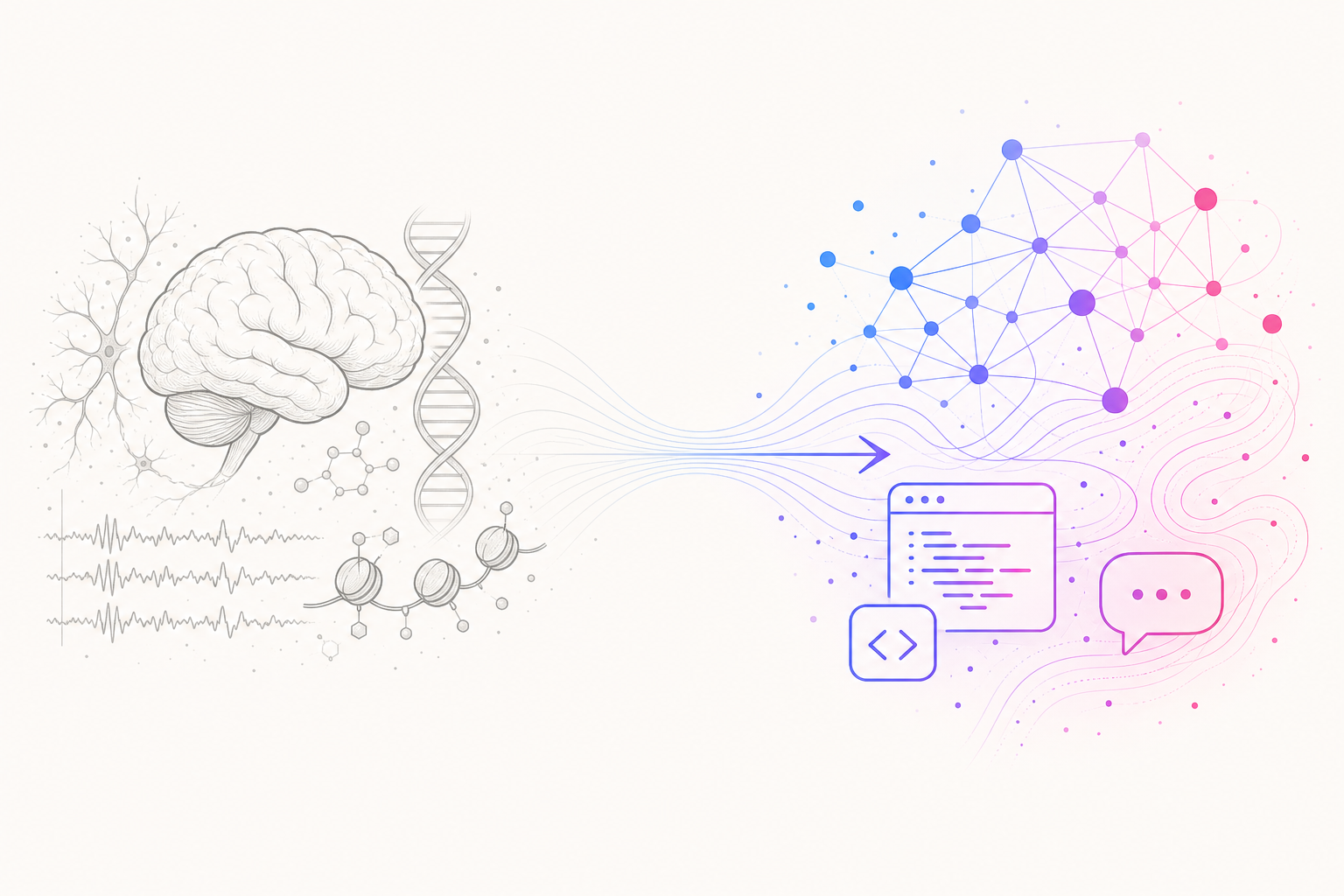
I have a Master's from Oxford and a half-finished PhD in the biology of aging. Now I spend about 10 hours a day coding with AI. My PhD supervisor has not fully recovered.
Here's the honest version of what happened, and why I think it matters for anyone who has been "meaning to get good at AI" for a while now.
The plan was to help cure aging
I studied neuroscience at Oxford, published research in PNAS, then started a PhD in the epigenetics of aging at UNSW. The plan was simple. Do some science, hopefully help cure aging.
Then I experienced the actual pace of biological research. The grant cycles. The years per experiment. And I landed somewhere uncomfortable: at this speed, the breakthroughs I actually care about probably won't show up in my lifetime. Unless something speeds the whole thing up. Something like AI.
The moment I couldn't unsee
So I stopped dabbling and started doubling and tripling down on it. And I couldn't unsee what happened next. Nearly everything I did got faster.
It's a bit like running versus riding a bike. Same effort, wildly different distance.
Most people try AI once, get a mediocre answer, decide it's overhyped, and wander off. I get it. But the truth is it takes time to figure out which model to use, how to prompt it, what context to give it, and how much to iterate. The skill is real, and it compounds.
Since then, tinkering with GPT-3 turned into shipping more than 60 tools, apps, and automations that create value for real companies. DialCoach grades sales calls and exports a coaching report in minutes. An AI tutoring platform and weekly analytics system for Olivia GRE. Over 1,000 branded video reels generated from templates with zero manual editing. Chatbots, booking systems, and lead-capture tools for cafes, dentists, tradies, lawyers, and clinics.
Got something manual eating your week? If your business has a "thing that takes too much of my time," there's a good chance I can build something that does it for you.
Book a free 15-min call →The bet underneath all of it
The bet is pretty simple. The fastest way to help with something like aging research, or honestly anything, is getting genuinely good at the tool that's accelerating every field. For me that meant pointing AI at small businesses first: the problems are concrete, the feedback is immediate, and the value shows up in the first week.
If you run a business, the same logic applies to you. You don't need to become an engineer. You need a few systems that quietly handle the repetitive work, so your time goes to the 20% that actually needs you. That is the entire idea behind what I build.
If you've been meaning to try AI properly
This is your sign. Spend the $20 on a Claude Pro or ChatGPT Plus subscription, give it 20 minutes a day, and see what happens. Pick one annoying task you do every week and try to get AI to do a first draft of it. Then iterate. That's the whole game.
If you'd rather skip the learning curve and just have the thing built, that's what I do. I'm going to document this whole journey here on the blog, roughly every week, so check back or grab the free guides while you're here.
Want an AI system built for your business?
I build custom AI chatbots, automations, and apps for small businesses. Melbourne-based, working worldwide. Tell me what's slow or scattered and I'll tell you honestly if AI is worth building.
Book a free 15-min call